Somewhere in the first serious conversation with a US venture investor, a founder with a company built in Dubai, Bengaluru, or Singapore hears the sentence: "We would need this to be a Delaware C-Corp." What follows is called the flip, and how well it goes depends almost entirely on when it starts.
Why investors insist
It is not chauvinism. Delaware corporate law is the most predictable in the world for venture terms: preferred stock, option pools, protective provisions, and an enormous body of precedent. US funds are often structurally limited in what they can hold, their lawyers price Delaware paperwork in hours instead of weeks, and every later acquirer or IPO underwriter expects the same shape. Asking a US fund to invest directly into a foreign entity is asking them to spend legal budget learning your country. Almost none will.
What a flip actually is
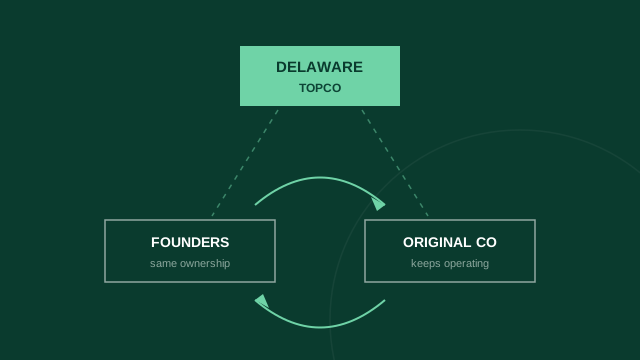
A new Delaware C-Corp is created above your existing company. The shareholders of the existing company exchange their shares for shares of the new Delaware entity, in the same proportions. When the exchange completes, the founders and early investors own the Delaware topco, and the topco owns the original company, which keeps operating exactly as before.
The part that needs real care: tax at home
The share exchange that is routine on the US side can be a taxable event in the founder's home country, because you are disposing of shares in one company to acquire shares in another. The treatment varies enormously by jurisdiction.
Founders in the UAE generally face no personal capital gains tax, which is why Gulf flips tend to be clean. India is the demanding case: the exchange can trigger capital gains on paper wealth, and India's outbound investment and round-tripping rules constrain how an Indian company can sit under a foreign parent at all. Indian flips are a specialist project with meaningful cost, which is precisely why so many India-focused founders incorporate in Delaware from day one, or weigh Singapore holding structures early. Every flip needs home-country advice before anything is signed.
When to do it
Before the term sheet. A flip executed calmly takes weeks: new entity, exchange agreements, share issuances, option grants re-created on the new cap table, bank accounts, and the intercompany housekeeping that follows. A flip executed inside a live diligence process takes the same steps compressed into a panic, at higher legal cost, while an investor watches. Worse, valuations and paper gains only grow; the earlier the flip, the smaller the taxable event at home tends to be.
After the flip, remember what you have built: a US parent with a foreign subsidiary. The Form 5471 reporting and transfer pricing obligations that come with that structure begin immediately, and your clean new cap table deserves books that match. That is the readiness work we describe in our Fundraising Readiness service.
The mistakes we clean up most often
Flipping during diligence. The single most expensive version of this project, in fees and in negotiating position.
Forgetting the home-country side. A flip blessed by US counsel and never reviewed at home, discovered by the home tax authority years later.
Losing the cap table in translation. Options, SAFes, and side letters from the old company that never get properly re-created on the new one, surfacing as diligence questions in the next round.
This article is general information about rules as they commonly apply, not tax or legal advice for your situation. Cross-border restructuring has significant tax and regulatory consequences that depend on jurisdiction and facts. Speak with qualified advisers in every relevant country before acting.